

Discover the Wisdom of your Inner World
with Holotropic Breathwork
Holotropic Breathwork is a powerful method of self-exploration and personal transformation.
Using breath, music and a safe and supported setting, it opens access to expanded states of consciousness, allowing deep inner processes to unfold naturally.

Transformative potential
Holotropic Breathwork isn’t aimed at specific outcomes. What emerges in a session is shaped by who you are and what you are ready to meet. While each person’s experience is different, people commonly describe shifts that include:
Release of stress and emotional weight
Greater clarity and perspective
Processing unresolved experiences, trauma and grief
Deeper understanding of patterns in life and relationships
Opening new possibilities where life has felt stuck or limited
Renewed creativity and a stronger sense of self
A greater sense of meaning and spiritual connection
Deeper connection to yourself, others and the natural world

A safe and supported setting
Holotropic Breathwork is a substance-free practice held in a safe and supported group setting.
All sessions are guided by facilitators trained through the Grof Transpersonal Training (GTT) programme - a rigorous, multi-year in person training integrating transpersonal psychology, trauma-informed practice, energy-focused bodywork and extensive experiential learning.
Led by your inner wisdom
At its core, Holotropic Breathwork is a self-empowering practise, led entirely by our own inner wisdom - a natural capacity within each of us that knows what we need and moves towards it in its own way.

What is an expanded state of consciousness?
Through breath, music and a safe and supported setting, this work can open access to deeper layers of the psyche - beyond what is usually reached through ordinary awareness and traditional talk therapy.
Experiences can unfold on many levels - physical, emotional, symbolic or spiritual. You may encounter forgotten memories, deep emotional processes, vivid imagery or profound insights into your life and inner world.
Trauma and transformation
At times, emotionally charged experiences from the past, that could not have been processed properly at the time, can remain buried in our psyche, quietly shaping how we think, feel and respond to the world.
Holotropic Breathwork creates the conditions for these experiences to gradually come into awareness - but only when there is enough safety and support for them to be met differently.
Working through them in a safe, supported environment allows their charge to release, gradually reducing their power to shape behaviour and opening the possibility for new responses.
Testimonials:
" I arrived with little knowledge of the process but a heart full of curiosity. The kindness and integrity that I know Brian for gave me the peace of mind I needed to dive into an unfamiliar practice.
The experience was nothing short of staggering. As a psychologist and coach, I was deeply impressed by the level of care Brian maintained - a steady, watchful presence that allowed us to truly surrender to the process. My own session was transformative and eight months on, I'm still integrating the profound physical and psychological insights I gained”.
Bernadette, Psychologist & Coach
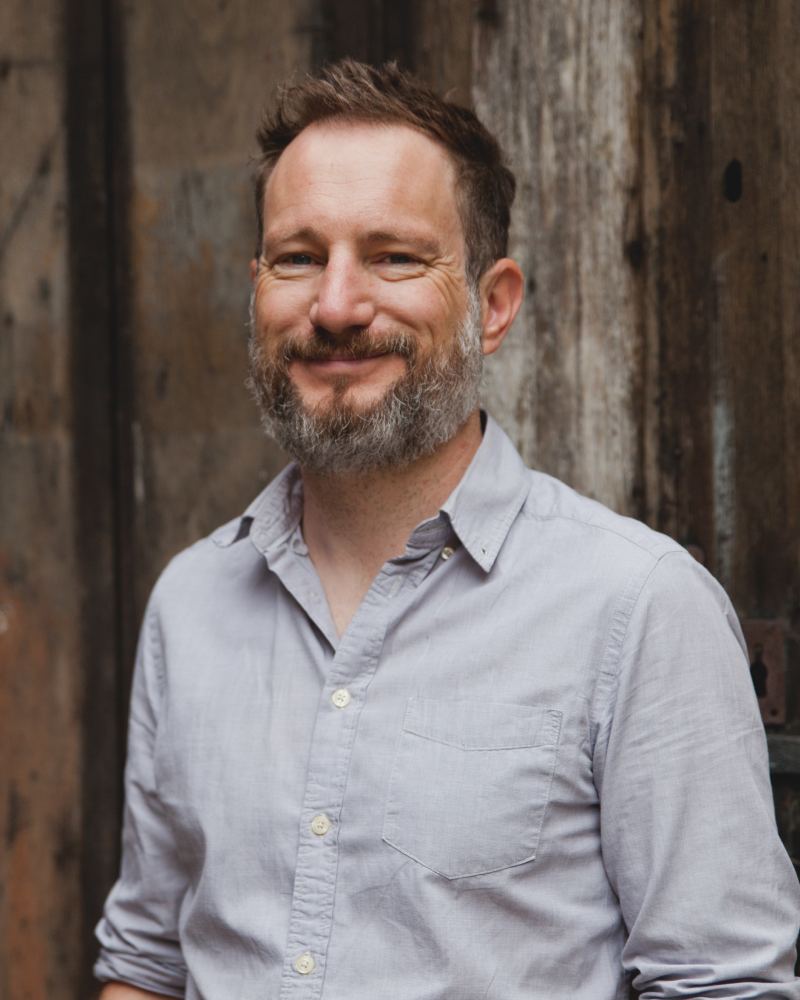
Hi, I’m Brian Crosby
I’m a certified Holotropic Breathwork facilitator based in Co Wicklow, Ireland.
I've always had a deep curiosity about transpersonal psychology and emotional and spiritual wellbeing. Since discovering Holotropic Breathwork, I've experienced its profound impact on my own life; my relationships, mental and physical health, creative output and my general sense of grounding in the world.
As a facilitator, I approach this work with a deep sense of humility, respect and care. Time and again, I have witnessed Holotropic states of consciousness open the door to profound healing, insight, clarity and transformation.
Alongside my work as a Holotropic Breathwork facilitator, I’m also a professional musician, composer, husband, and father to our three children.
If you’re curious about this work and would like to explore whether a workshop is right for you, I invite you to book a complimentary 15-minute discovery call using the link below.
Frequently Asked Questions
-
Holotropic Breathwork can be valuable for people from many different backgrounds and life situations. Some participants come with a clear therapeutic intention, while others are simply curious about the deeper dimensions of consciousness.
People are often drawn to this work when they:
feel called to explore their inner world more deeply
wish to complement an ongoing therapeutic process
want to process unresolved emotional experiences or trauma
are navigating life transitions, grief, or personal crises
feel stuck in recurring patterns or life situations
experience psychosomatic symptoms or chronic stress
seek greater meaning, creativity and authenticity in their lives
work in therapeutic, coaching or psychosocial professions and wish to deepen their self-exploration and self-care
Holotropic Breathwork does not require a specific problem to work on. Many participants simply feel a quiet inner curiosity about consciousness and the deeper layers of the psyche.
In fact, one of the remarkable aspects of this work is that the process is guided by the individual’s inner healing intelligence. Each session unfolds differently, bringing forward what is most relevant for that particular moment in a person’s life.
-
Many people come to Holotropic Breathwork after years of valuable work in talk therapy, feeling that something important still sits out of reach.
In expanded states of consciousness, Holotropic Breathwork can open access to deeper layers of the psyche - areas that are not usually available in ordinary awareness. At times, emotionally charged experiences may have been pushed out of awareness as a way of coping. Even when they are no longer conscious, they can continue to shape how we feel, think and respond to the world.
For example, in the face of overwhelming experience, the mind and body may rely on strategies like dissociation - an essential survival strategy that protected us when we needed it most, but one that may no longer be serving us.
Holotropic Breathwork works with expanded states of consciousness that allow access to parts of the psyche we cannot reach in ordinary awareness. In this opened space, what has long been buried can gradually come into awareness - but only when there is enough safety and support for them to be met differently. Working through them in a safe, supported environment allows their charge to release, gradually reducing their power to shape behaviour and opening the possibility for new responses.
The work also recognises that trauma is not only psychological - it is also held in the body. That is why the process is experiential rather than conversational. Through breath, music and (when appropriate) supportive bodywork, the body is given a way to release what it has been holding, often without needing to put it into words.
While this approach is not a replacement for therapy, many people find it a valuable complement, offering a more direct, experiential way of working with what feels unresolved.
-
This is one of the most common and most understandable concerns people bring to the work. The worry of losing control, being overwhelmed or reopening wounds that feel safer left closed.
At its core, Holotropic Breathwork is self-directed and self-regulating. The psyche has a natural capacity to protect and organise experience, and within a carefully supported setting, that same intelligence guides what emerges - and how. Emotional, psychological and physical safety are the foundation of everything that happens in a session.
Rather than pushing into difficult material, this work creates the conditions for it to arise only when there is enough support to meet it in a different way. In that context, experiences can be processed and integrated, allowing their intensity to gradually soften and reducing their influence over time.
In essence, this is not about being overwhelmed, but about creating the conditions where your system can begin, gently and safely, to release what it has been holding.
If you’d like to explore this in more depth, our Trauma and Transformation page goes into greater detail.
-
While Holotropic Breathwork is generally considered safe, it isn’t for everyone. Because it can cause a strong physical and emotional reaction, certain groups should not attempt it, including people who are pregnant, have serious cardiovascular conditions (including a history of heart attack), serious hypertension, epilepsy, osteoporosis, recent surgeries, physical injuries or a history of severe or acute mental health conditions. People with asthma may be able to participate, but need to make sure they have their inhaler with them.
A medical questionnaire must be completed as part of the registration process to ensure the workshop is appropriate and safe for you.
-
Training and Certification — Grof Transpersonal Training
Holotropic Breathwork facilitators are certified exclusively through Grof Transpersonal Training (GTT). Founded by Stanislav and Christina Grof in 1989, it is the most established internationally recognised programme for training in expanded states of consciousness, and represents the gold standard in this field.
What the training covers
The programme is grounded in Transpersonal Psychology - a framework that extends beyond conventional models of the mind to encompass the full spectrum of human experience, including somatic, relational, spiritual and collective dimensions.
The training is in person over at least three years and combines theoretical study with experiential learning. The curriculum covers the theory and practice of Holotropic Breathwork, Transpersonal Psychology, trauma-informed practice, energy-focused bodywork and extensive experiential learning.
Ethics and certification
Certification is not automatic - it is at the discretion of the certification staff, ensuring that only those who meet the full standard of the programme are authorised to facilitate. Certified facilitators are required to engage in ongoing CPD and work strictly within the guideline of the GTT Code of Ethics.
-
No, bodywork or any other kind of physical contact is not mandatory during Holotropic Breathwork.
At a Holotropic Breathwork workshop, everything is based on informed consent and mutual agreement. Bodywork in the context of Holotropic Breathwork (focused energy-release work) follows two basic principles:
It is initiated by the breather
It is done collaboratively between the breather and facilitator
In focused energy-release work, the breather remains in control throughout.
We follow strict ethical guidelines about touch, boundaries and physical contact which can be read in the code of ethics.
-
Holotropic Breathwork should not be considered a primary treatment for physical illness. Physical illness should always be treated within an appropriate medical framework.
That said, it is not uncommon for Holotropic Breathwork to support improvement in psychogenic illness or chronic pain. In some cases, this may occur where conventional medical approaches have not fully resolved the issue.
It is important to work with a qualified facilitator and your physician when considering whether Holotropic Breathwork may be appropriate for a physical condition.
-
It can be helpful to begin with a definition of addiction proposed by Gabor Maté:
Addiction is manifested in any behaviour—substance-related or not—that provides temporary relief or pleasure, followed by long-term negative consequences, and which the person craves and cannot give up despite these consequences.
In this view, addictive behaviours, whether it be to substances, technology, sex, pornography, work, food, gambling etc, often serve as attempts to cope with underlying emotional or psychological issues.
While Holotropic Breathwork can provide a therapeutic roadmap to treat underlying conditions that result in addictive behaviours, it is important to realise that serious substance addictions are more complex and typically requires a comprehensive and structured approach.
Overcoming active addiction to substances such as alcohol, cocaine, methamphetamine, or heroin generally involves significant support, commitment and often professional treatment.
Holotropic Breathwork on its own is not sufficient as a primary treatment for active addiction. In fact, ongoing substance use is generally considered a contraindication for participation, as it can interfere with the safety and effectiveness of the process.
For those dealing with serious substance addiction, engaging in appropriate medical or therapeutic treatment is essential.
Once the treatment proceeds to the stage where the person is not actively using the substance anymore, Holotropic Breathwork may be introduced as a complementary practice - supporting ongoing recovery, helping to address underlying patterns, and in establishing new meaning and purpose in the life of the recovering person.
-
No, there is only one Holotropic Breathwork.
There are, however, many different kinds of breathwork. You may have heard of Conscious Breathwork, Transformational Breathwork, Maitri Breathwork, Psychedelic Breathwork, Breathwork for Mental Health, Breathwork Meditation, Rebirthing Breathwork, Neurodynamic Breathwork among others.
Breathwork can have a significant impact on mental and physical wellbeing. If you are considering engaging in it, it is important to understand that different approaches can lead to very different experiences and outcomes.
For this reason, it is important to be clear about what kind of breathwork you are engaging in, and what you can expect from the practice.
Holotropic Breathwork is an internationally recognised method grounded in Transpersonal Psychology - a framework that extends beyond conventional models of the mind to encompass the full spectrum of human experience, including somatic, relational, spiritual and collective dimensions.
Holotropic Breathwork Facilitators are certified exclusively through the Grof Transpersonal Training programme, Only certified graduates of Grof Transpersonal Training are authorised to facilitate Holotropic Breathwork.